

The Israeli Climbing Association (ILCA) is implicated in occupation and apartheid in Occupied Palestine. World Climbing and the UIAA are complicit despite their obligations under international law and their own statutes.
To date, neither federation has conducted an investigation.
This website is written and maintained by Jimena Villar de Onis and Luisa Gierich, on behalf of Climbers for Palestine Spain
Here is the evidence.
ILCA’s role in the annexation & exploitation of Palestinian land and climbing crags in the West Bank
How the Israel Climbing Association’s crimes are contrary to World Climbing’s statutes
How the Israel Climbing Association’s crimes are contrary to UIAA’s statutes
How World Climbing and the UIAA are in breach of the Olympic Charter
How Israeli climbers are being funded by the Israeli occupation: sportswashing in climbing
How the ICLA, its staff and its athletes participate in the Israeli military
Content
1. ILCA’s participation in the annexation & exploitation of Palestinian land in the West Bank
The Israel Climbing Association is actively: (1) opening and equipping crags on occupied land and (2) promoting the use of the occupied crags by settlers, therefore engaging in acts that are in breach of the Geneva Conventions and declared illegal by the ICJ and many major human rights international organizations (Amnesty International, Human Rights Watch, Médecins Sans Frontières, International Committee of the Red Cross,UNICEF, Norwegian Refugee Council, and the list goes on).
All the information about the Israel Climbing Association's participation in the annexation of Palestinian land is found on their webpage, official climbing guides, and social media posts.
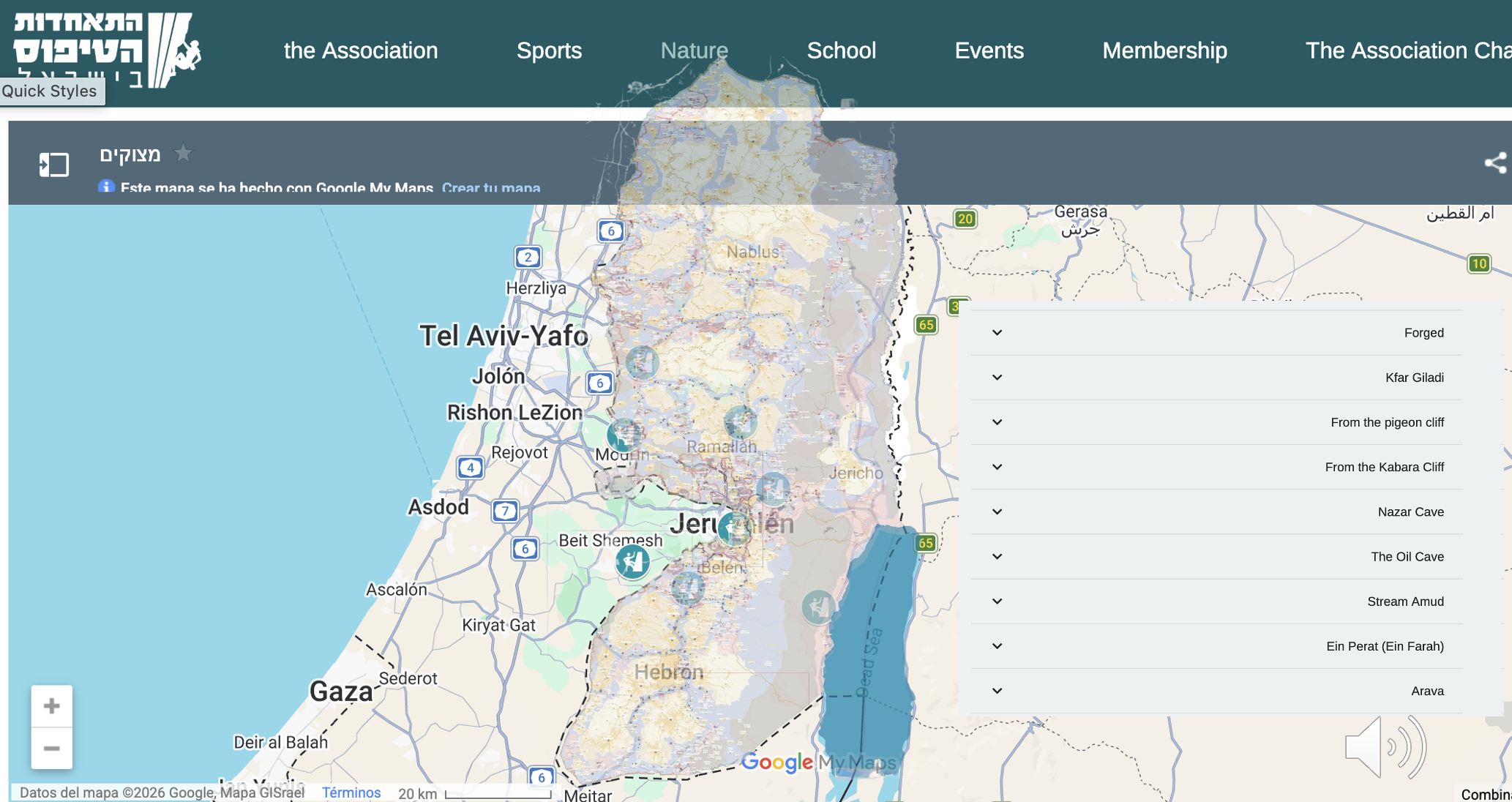


The Israel Climbing Association hosts a map of its crags under “Israel Nature Climbing Sites”, many of which are located in the West Bank. We have superimposed the West Bank boundaries from UN OCHA’s 2025 map to show their location in relation to the occupied territory.


The Israel Climbing Association posts about bolting new lines in Beit El, in occupied West Bank...
…. and about having complete control over access in Ein Prat-Ein Fara, in occupied Palestine.


The Israel Climbing Association boasting of a field trip on the occupied Ein Prat-Ein Fara in the West Bank as “the most beautiful climbing site in Israel.” As shown below, this is part of illegally occupied Palestine.
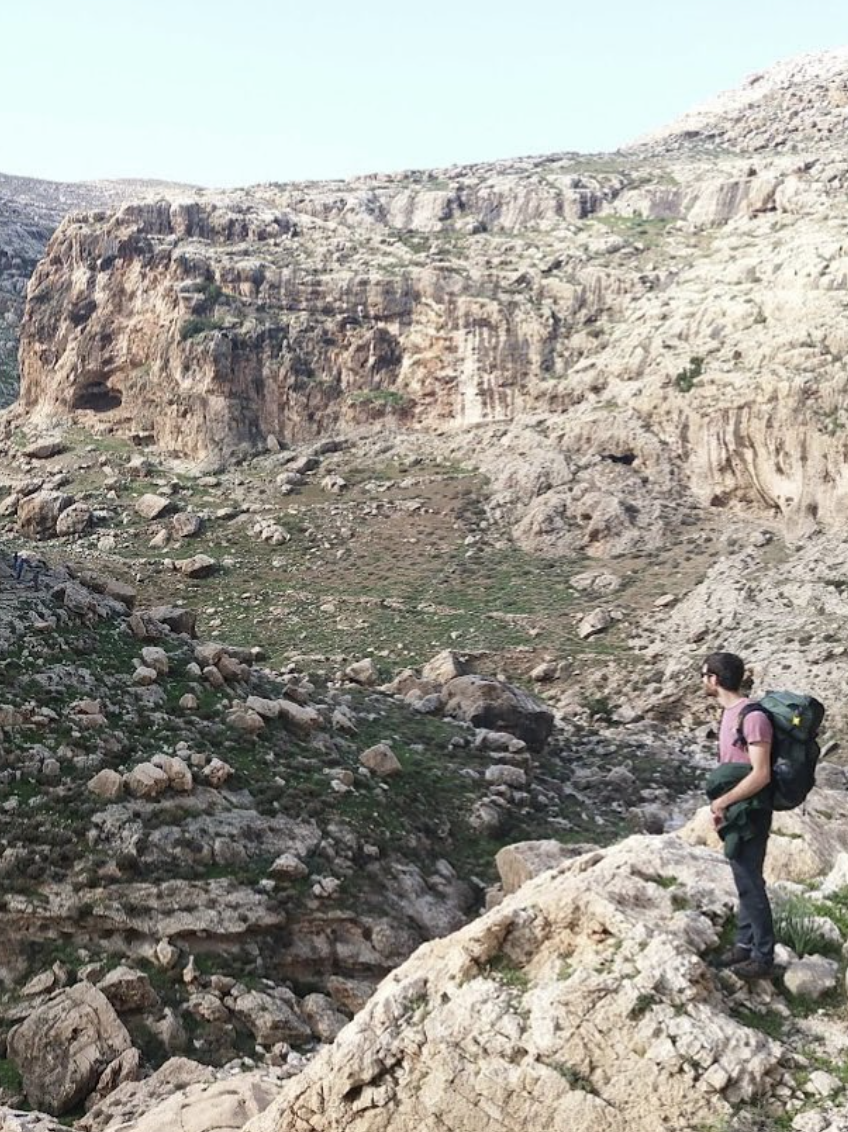

Below is a non-exhaustive list of crags being developed on occupied land*
*We will continue updating information on this list as the situation is constantly changing.
| Crag | Information on Occupation of the Land | Climbing Site Description (English) | Climbing Site Description (Hebrew) |
|---|---|---|---|
| Nahal Tmarim (West Bank) Coordinates: 31.63951, 35.38896 Hebrew: תמרים |
Given that the area is rarely visited by Palestinians, due to the fact that the road that crosses that area is a dead end to a checkpoint at the south of the West Bank, there is little information about the state of the crag outside from the fact that it is on occupied land. The crag was developed by Israeli climbers and Gil Aberbauch opened the boulders. Source: 27 Crags |
A small crag offering a variety of sport, trad, and bouldering routes. Mainly bouldering, developed by Gil Averbuch. Not a very frequently climbed cliff, so it may be dusty and dirty. Type: Sport, trad, and bouldering Rock: Mostly limestone, not very solid except for the waterfall route and the boulders. Route length: 10–50m Routes: 2 sport, 4–6 trad, 12 boulders Season: All except summer. Very hot on warm days. Winter → beware flash floods. Shade: Better in afternoon. Camping: Prohibited in nature reserve. |
מצוק קטן הכולל טיפוס ספורטיבי, מסורתי ובולדרים. רוב הטיפוס במקום הינו בולדרים שפותחו ע״י גיל אברבוך. מצוק שאינו נחשב לפופולארי ולכן ייתכן כי המסלולים מלוכלכים ואבקתיים. סוג טיפוס: ספורט, מסורתי ובולדרים סוג סלע: ברובו גיר, אינו איכותי במיוחד למעט מסלול המפל והבולדרים אורך מסלול: 10–50 מטר מספר מסלולים: 2 ספורט, 4–6 מסורתי, 12 בולדרים עונה: כל השנה מלבד הקיץ. חם מאוד בימים חמים. בחורף יש להיזהר משיטפונות. צל: מגוון כיוונים. עדיף בחצי השני של היום. לינה: אסורה בשמורת טבע. |
| Ein Prat-Ein Fara (West Bank) Coordinates: 31.83424, 35.30189 Hebrew: עין פארה |
Ein Fara was governed and owned by Hizma town before the occupation control it in 1967. Ein Fara is located on the lands of the Palestinian village of Anata northeast of Jerusalem. The area is mostly known for having a spring, which historically served as the primary source of drinking water and agricultural water for Anata and several surrounding villages. In 1967, Israel appropriated the spring and cut-off water access to the villages. Five settlements have been built on the land and they have renamed it to “En Prat Nature Reserve”. The crag was first developed by Israelis in the 1980s, with the bulk of the sports climbing routes opened in the 1990s and 2000s. Moreover, the Ein Prat national park is located in Area C of the occupied West Bank, where the land is under Israeli military and civil control but is internationally recognized as occupied Palestinian territory. Sources: FMEP, 27 Crags, Emek Shaveh |
A very large crag (some would say the best in the area), with many face routes, as well as slabs and overhangs. Type: Sport, trad, mixed Rock: Limestone Route length: 15–35 meters Number of routes: 100+ Season: Year-round, optimal Nov–Apr Shade: Routes in shade throughout the day Camping: Prohibited |
מצוק גדול מאוד (ויש שיגידו) הטוב באזור. מרובה מסלולים “פייס” אך גם סלאב ושליליים. סוג: ספורט, טראד, Mixed סלע: אבן גיר אורך מסלולים: 15-35 מטר כמות מסלולים: 100+ עונה: כל השנה, התנאים המיטביים בין נובמבר לאפריל. צל: בזכות מבנהו קיימים מסלולים מוצלים לאורך כל היום. לינה: אסורה |
| Ein Yabrud Crag (West Bank) Coordinates: 31.94228, 35.2383 Hebrew: מצוק בית אל |
Ein Yabrud crag is located next to the Beit El settlement, founded in 1977 by the right-wing ultranationalist group Gush Emunim (Bloc of the Faithful)
. The crag was initially bolted by
international climbers around 2014-2015 and is featured in the 2019 Climbing Palestine guidebook. In 2022, the ILCA, endorsed by the IFSC and the UIAA, plagiarised the guidebook. The crag was declared before October 2023 a military zone (firing zone) and Palestinians have been denied access to it ever since. Sources: B'Tselem, 27 Crags |
Beit El – Ein Yabrud Crag is a beautiful limestone cliff in the Beit El hills, surrounded by nature reserves, oaks, and olives. The 20m crag features pockets, slabs, roofs, and smooth faces, with nearly 40 routes (grades 4+ to 8a). Type: Sport Rock: Limestone Route length: 15–22 meters Routes: 39 Season: Year-round Shade: Exposed after 12:30 Guidebook: PDF |
מצוק בית אל – עין יברוד הוא מצוק גיר יפהפה, הממוקם בלב הרי בית אל, בין שמורות עתיקות, עצי אלון וזית. גובהו עד כ-20 מטר, עם כ-40 מסלולים (דירוג 4+–8a). סוג: ספורט סלע: אבן גיר אורך המסלולים: 15–22 מטר כמות מסלולים: 39 עונה: כל השנה צל: חשוף לשמש מ-12:30 גיידבוק: PDF |
| Yabrud (West Bank) Coordinates: 31.981298, 35.242629 |
This crag is next to Yabrud town. It was first developed by foreign climbers and over the years many foreign and Palestinian climbers have contributed routes. In 2024, local climbers discovered a new settlement had been established on top of the crag and the road leading to the crag had been closed. The last known access by Palestinian climbers to the crag (January 2025) resulted in the climbers being evicted by the IDF as the area is now considered a military zone, the access to which is forbidden to Palestinians.
Source: 27 Crags |
This crag is not featured in the Israel Climbing Association webpage. Access restricted for Palestinian climbers. | |
| Beit Aryeh (West Bank) Coordinates: 32.04005, 35.04947 Hebrew: בית אריה |
The Beit Aryeh illegal settlement was founded in 1981. The land was confiscated from two nearby Palestinian villages - Aboud and Al-Lubban al-Gharbi. Beit Aryeh is known for a 2020 report of dumping their untreated sewage on a nearby Palestinian village. The Israel Climbing Association re-equipped the crag in 2006 with the collaboration of the Beit Aryeh Local Council. Access is described on the Crag website as "Beit Arye is an Israeli settlement in the occupied West Bank. As the crag (main wall) is within the fenced-off area of the settlement, you have to enter the settlement gates in order to reach it. If you leave a passport with the security guard he will give you a key to pass through the fence." Source: Middle East Eye the Crag |
Climbing at this crag began in the 1990s. During the Intifada in 2001, activity at the crag decreased significantly. In 2006, after things calmed down, the Climbing Club, in collaboration with the Beit Aryeh Local Council, re-equipped the crag for climbing. There are two sectors at the site: The Main Crag – To access it, you must leave a deposit at the community gate in order to receive a key for the access gate. The Small Crag – Located along the perimeter road of the community. In April 2019, major work was done to re-equip it for climbing: bolts were replaced and anchors installed.. Type: Sport, trad Rock: Solid limestone Route length: 10–25 meters Routes: ~50 sport, 20 trad Season: Spring–fall (possible in winter except after rain) Shade: Summer → shaded after 13:00; Winter → shaded most of the day Guidebook: PDF |
הטיפוס במצוק זה החל בשנות ה-90. במהלך האינתיפאדה ב-2001 הפעילות פחתה, וב-2006 הוכשר מחדש עם מועצה מקומית בית אריה. שני מצוקים: הגדול (דורש מפתח) והקטן (הוכשר מחדש ב-2019). סוג: ספורט, טראד סלע: אבן גיר יציב אורך מסלולים: 10–25 מטר כמות: כ-50 ספורט, 20 טראד עונה: אביב–סתיו צל: בקיץ מוצל אחרי 13:00; בחורף רוב היום גיידבוק: PDF |
| Golan Heights (Oil Road) (Golan Heights) Coordinates: 33.16662, 35.69141 Hebrew: מצוק הנפט |
This crag is located in the occupied Syrian Golan Heights, annexed in 1967. There are about 30 Israeli settlements in the area. The crag is surrounded by Kibbutz Shamir and Kibbutz Gonen. The guide is written by Alon Avraham. The crag is located on the edge of a military zone. Source: BBC |
A crag in the Golan Heights, located along the “Oil Road.” It was bolted during the COVID-19 period by a group of climbers from the Upper Galilee. The crag faces north and offers a beautiful view of the Hula Valley. Type: Sport Rock: Limestone Route length: 10–12 meters Routes: 12 Season: Year-round Guidebook: PDF |
מצוק ברמת הגולן, על דרך הנפט. בולט בקורונה ע"י מטפסי הגליל העליון. מפנה צפוני עם נוף לעמק החולה. סוג: ספורט סלע: אבן גיר אורך: 10–12 מטר מסלולים: 12 עונה: כל השנה גייד: PDF |
| Cliff of the Patriarchs (West Bank) Coordinates: 31.67027, 35.13629 Hebrew: מצוק האבות |
The crag is located on the "Way of the Patriarchs" in the Gush Etzion area, between the communities of Eleazar and Neve Daniel. Both Elazar and Neve Daniel are illegal Israeli settlements built on Palestinian land, specifically the communities of al-Khadir (annexed 1975) and Wadi al-Nas (annexed 1982). With funding from the Gush Etzion Tourism Council, in July 2020, the crag was opened and developed with the support of the Israeli Climbing Federation. Sources: Jerusalem Story, Walla |
The cliff is located on the "Path of the Patriarchs" (Derech HaAvot) in Gush Etzion, between the settlements of Elazar and Neve Daniel.
The cliff was opened and developed with the support of the Israel Climbing Federation and funding from the Gush Etzion Regional Council Tourism Department, in July 2020.
There were several climbing routes on the cliff that were bolted over the past decade by Yehoshua Roth, Shimon Ben Zaken, and other partners. They also climbed several bouldering problems. These routes have been rebolted, and many new sport climbing routes have been added.
Type: Sport Rock: Limestone Route length: 10 meters Routes: 46 sport Season: Year-round Shade: Exposed in afternoons Guidebook: PDF |
המצוק ממוקם על “דרך האבות” בגוש עציון בין אלעזר ונווה דניאל. נפתח ביולי 2020 בתמיכת התאחדות הטיפוס ותיירות גוש עציון. מסלולים בולטו מחדש ונוספו חדשים. סוג: ספורט סלע: אבן גיר אורך: 10 מטר מסלולים: 46 עונה: כל השנה צל: חשוף משעות הצהריים גייד: PDF |
The annexation of land in Occupied Palestine for climbing crags results in two direct actions
The appropriation of Palestinian land and its transformation into recreational infrastructure serving the settler population
The normalization of illegal settlements through the promotion of these areas as legitimate climbing destinations.

2. How World Climbing and the UIAA are complicit in the annexation and exploitation of Palestinian land and are in direct breach of the ICJ’s advisory opinion
World Climbing and the UIAA are providing institutional legitimacy to an organization that is partaking in the illegal occupation of Palestinian land and the establishment of the settlements as well as encouraging international climbers to normalize and participate in recreational activities on stolen land.
World Climbing and the UIAA are fully aware and endorse this, as both have their logos on the guidebooks of crags on occupied land.
Here is the Beit El/Ein Yabrud guidebook available on the Israel Climbing Association website:

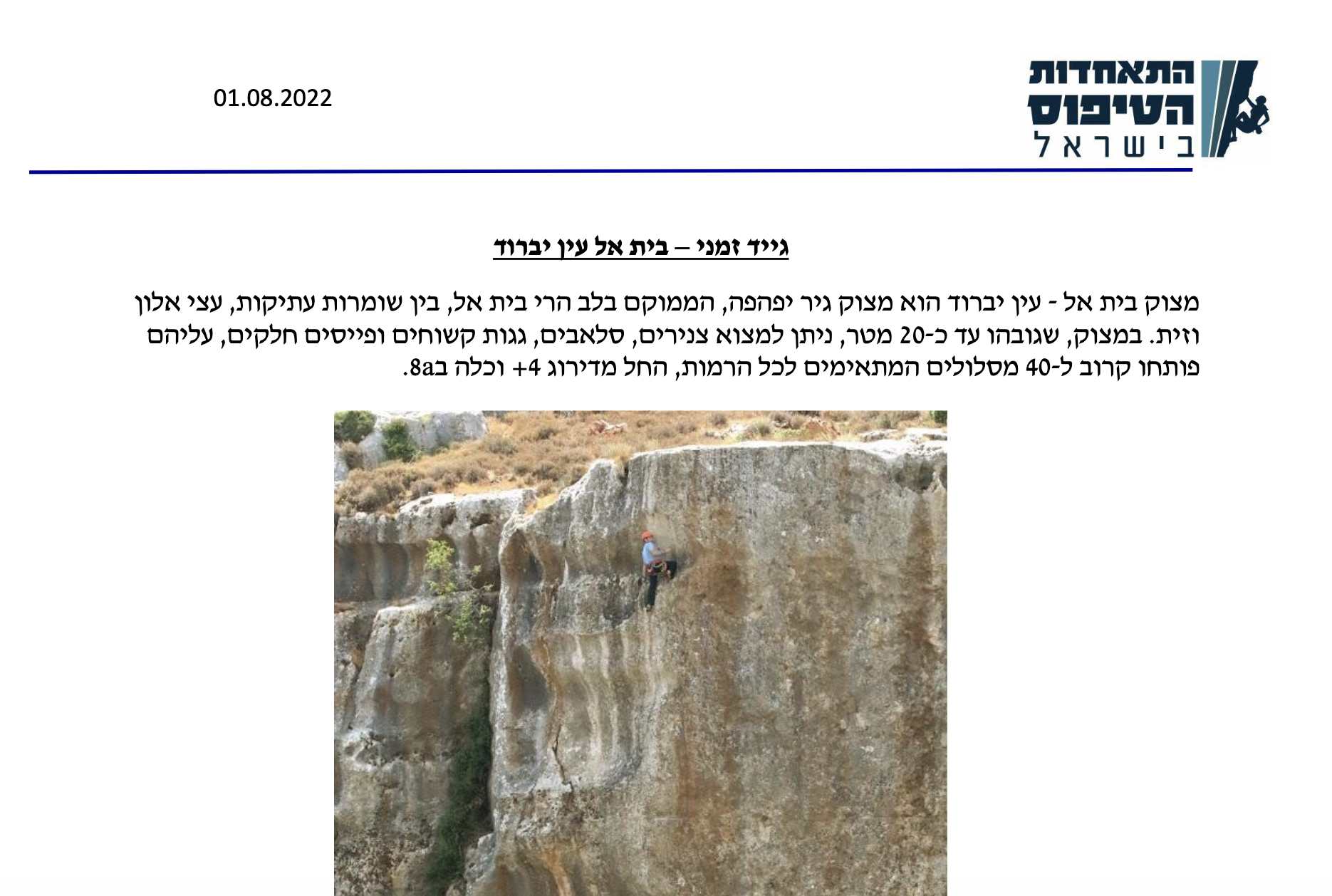
Since summer 2026, visitors must now request access to this climbing guide on their webpage
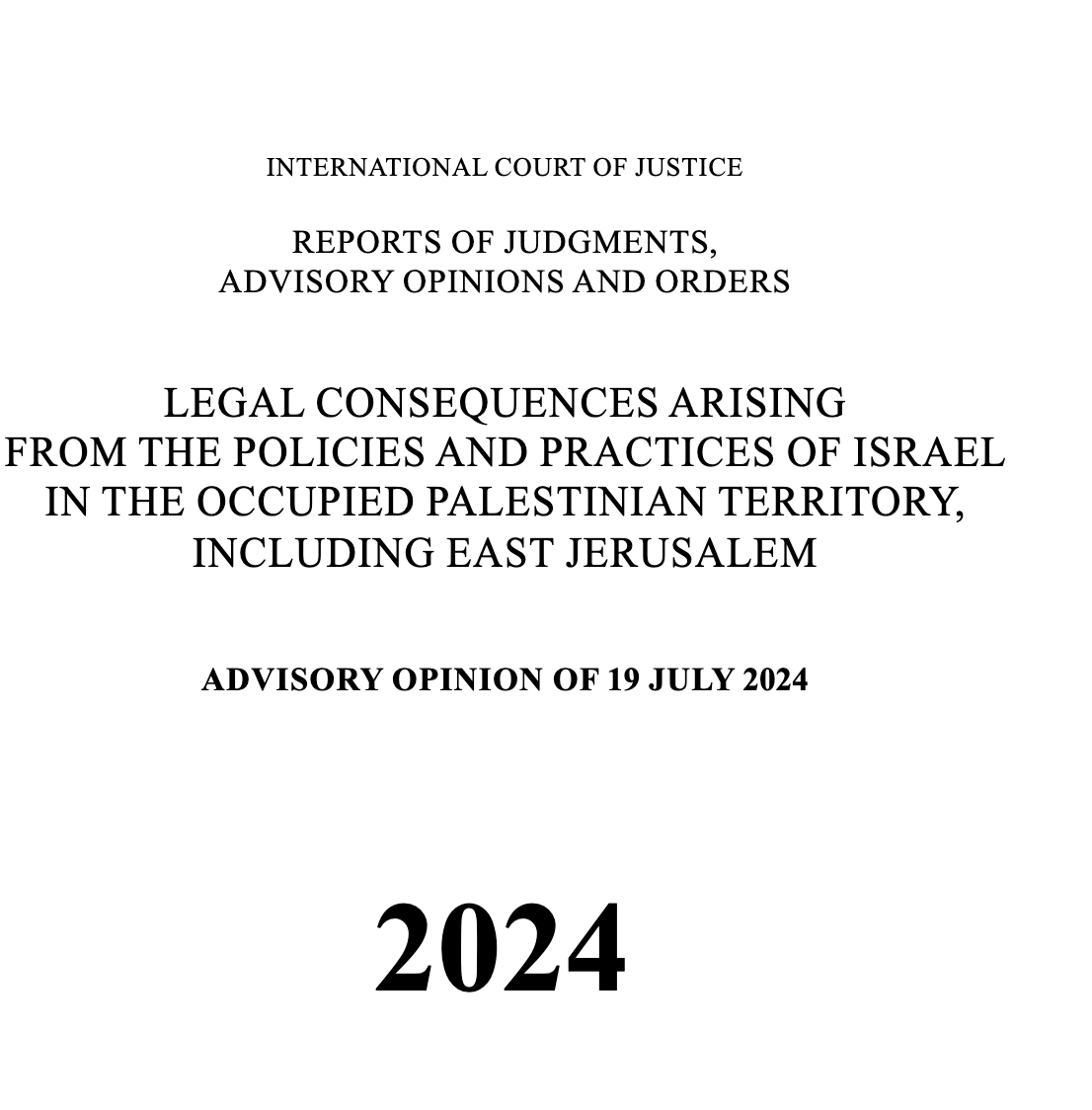
World Climbing and the UIAA are not only complicit in the crimes being committed by the Israel Climbing Association, they are also directly in breach of international law through the 2024 International Court of Justice’s advisory opinion.
The ICJ ruling requires all states and international organizations not to recognize Israel’s illegal military presence in the occupied Palestinian territory.
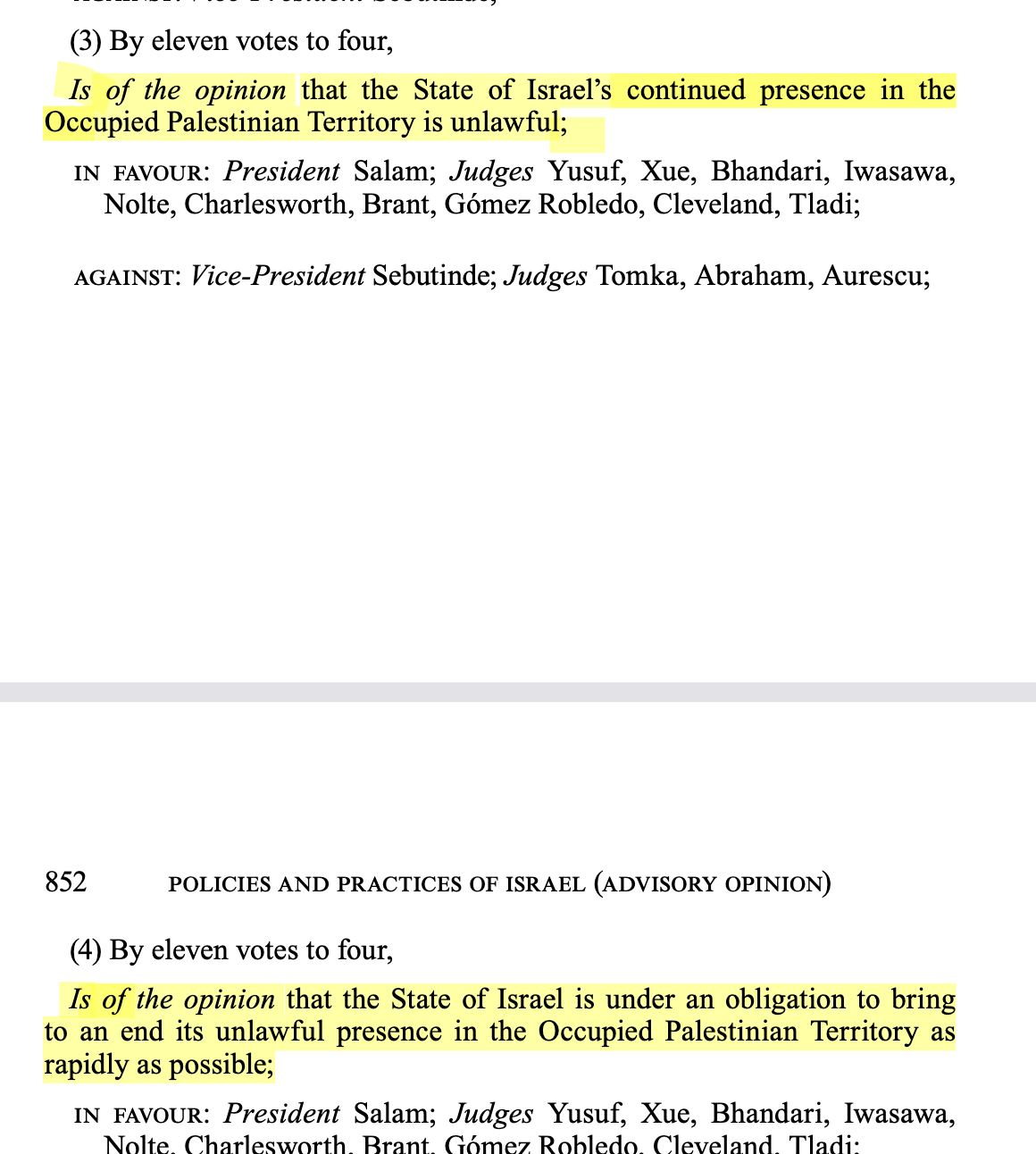
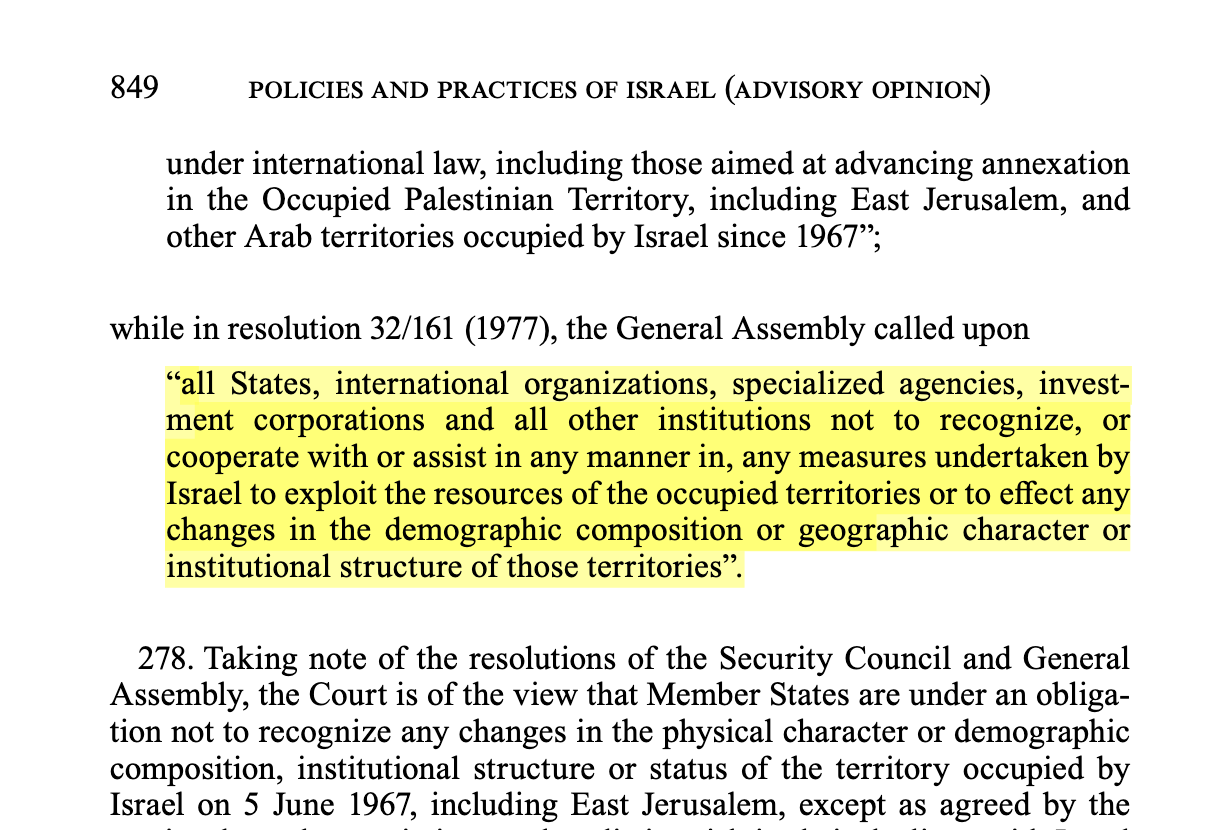
World Climbing is considered an international organization as per Article 2 of its Statutes:
“World Climbing is established for an indefinite period with legal status as an association in accordance with Articles 60 et seq. of the Swiss Civil Code having its legal seat in Bern, Switzerland. World Climbing is a non-profit and non-governmental international organisation.”
The UIAA is considered an international organization as per Article 1 of its Articles of Association (AoA):
“The "Union Internationale des Associations d'Alpinisme" (hereinafter UIAA), founded at Chamonix on 27 August 1932, is the international federation of climbing and mountaineering organizations. It functions in accordance with these Articles of Association and is governed by the provisions of the Swiss Civil Code (Art. 60 and subsequent Articles).”
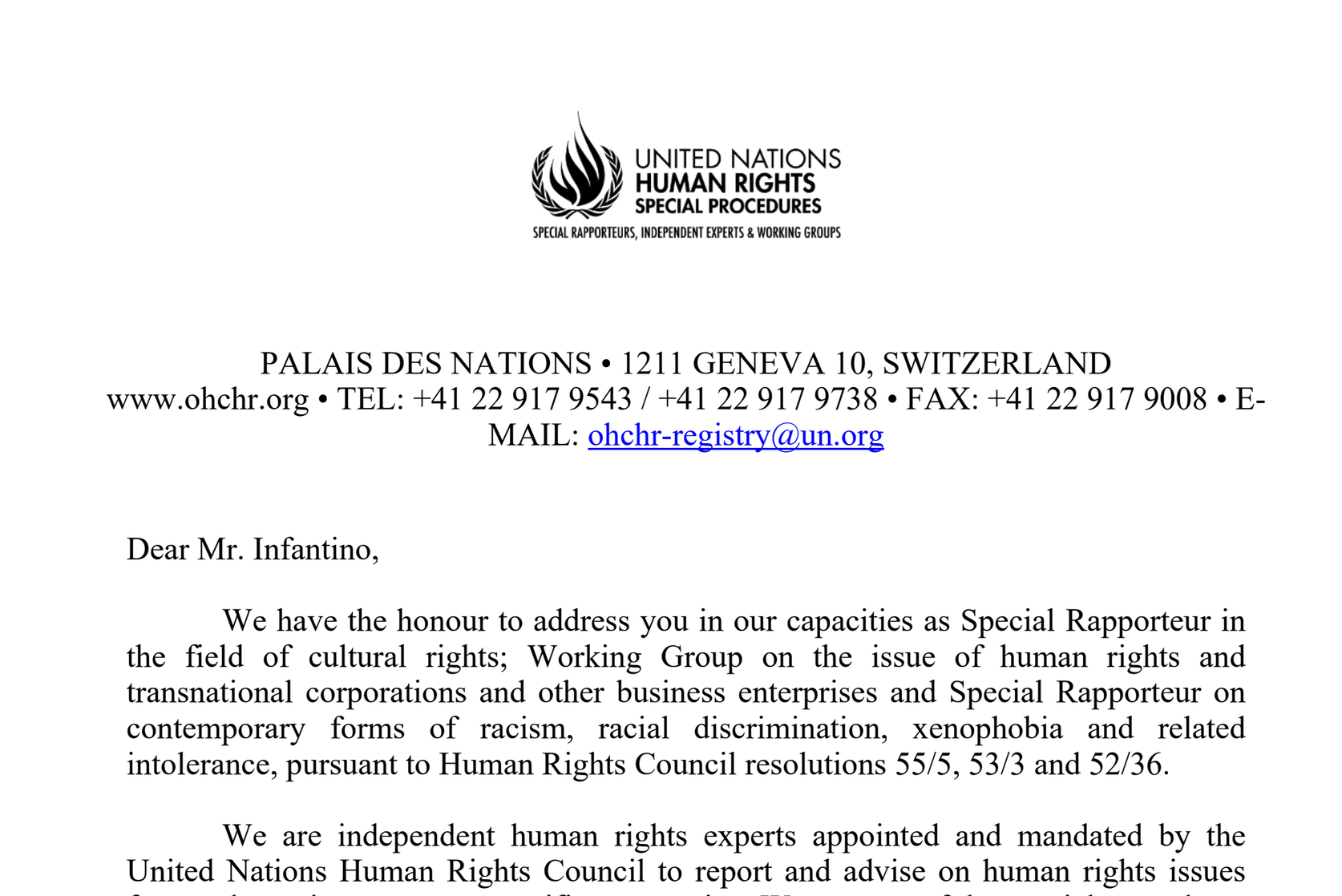
The United Nations Human Rights Council has in fact already ruled on the question in October 2024, through an official communication to the President of FIFA, Gianni Infantino, in which they clear state: “We would like to remind FIFA that international human rights law, which includes the right to self-determination, as well as the prohibition of racial discrimination and apartheid, applies to private international organizations, especially those that have global jurisdiction and mandates such as itself, in accordance with the UN Guiding Principles on Business and Human Rights. [ ] As such, sports governing structures must integrate human rights standards into their governance structures and operations.” The full communication merits careful reading, as it exposes how the IFSC and the UIAA are legitimizing the illegal occupation of Palestine. Human Rights Watch and FairSquare have also shared these same concerns with FIFA.
World Climbing and the UIAA, by not suspending the Israel Climbing Association and by allowing Israeli athletes to compete, are legitimizing the crimes being committed by the Israel Climbing Association and are in breach of their responsibility under international law to avoid legitimizing an unlawful situation and contributing to the normalization of Israel’s illegal occupation.
World Climbing and the UIAA are promoting entities that are implementing apartheid in climbing.
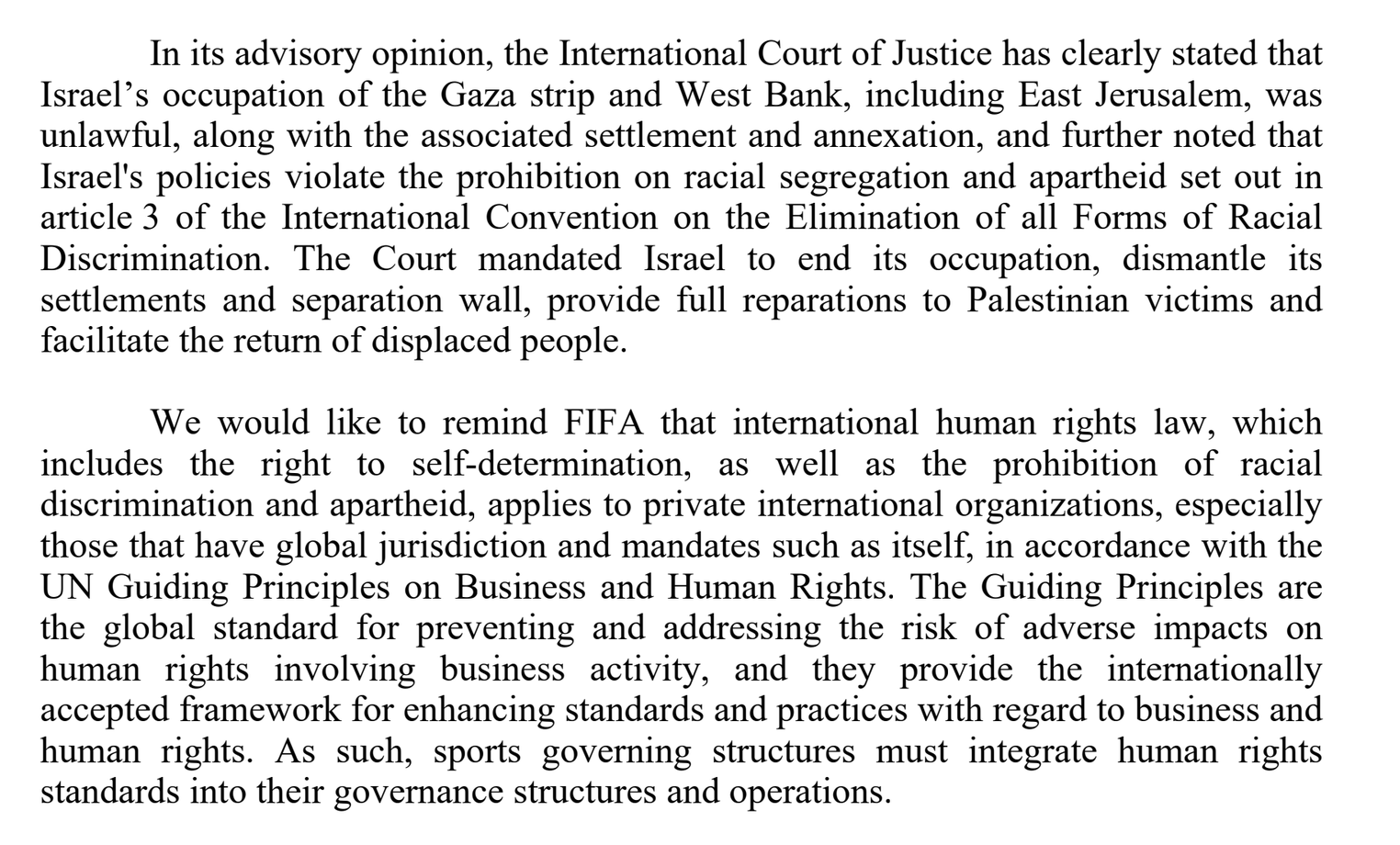
Excerpt from the 2024 letter by the UN Human Rights Special Procedures experts to FIFA President Gianni Infantino, calling on FIFA to uphold international human rights law in relation to Israel’s occupation of Palestinian territory and the participation of Israeli football clubs based in settlements.
3. How the Israel Climbing Association’s Crimes are contrary to World Climbing’s statutes
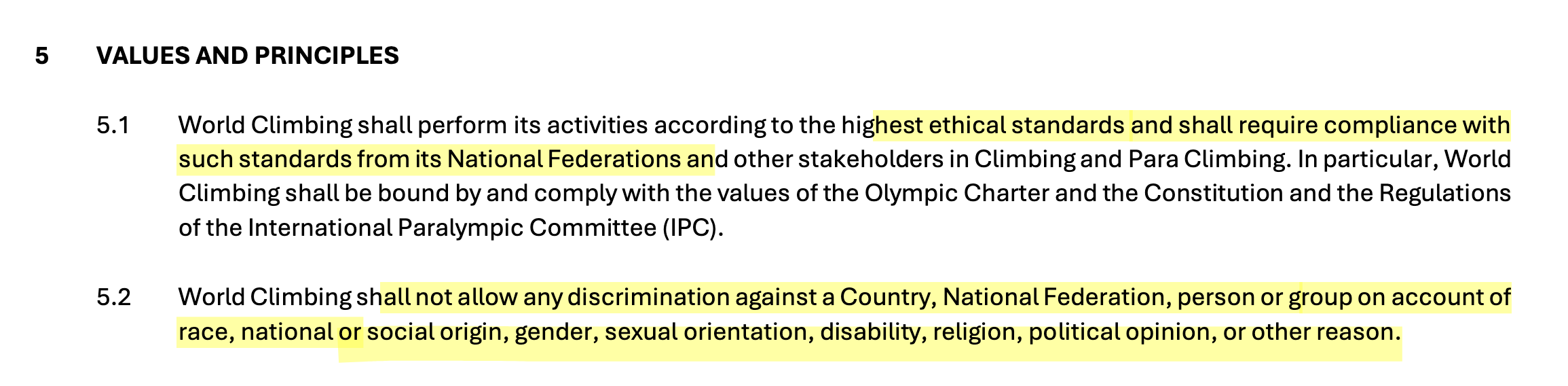
World Climbing requests in its Statutes for National Federations to perform according to the highest ethical standards and not allow any discrimination against a group of people on account of their race, national or social origin, and more:
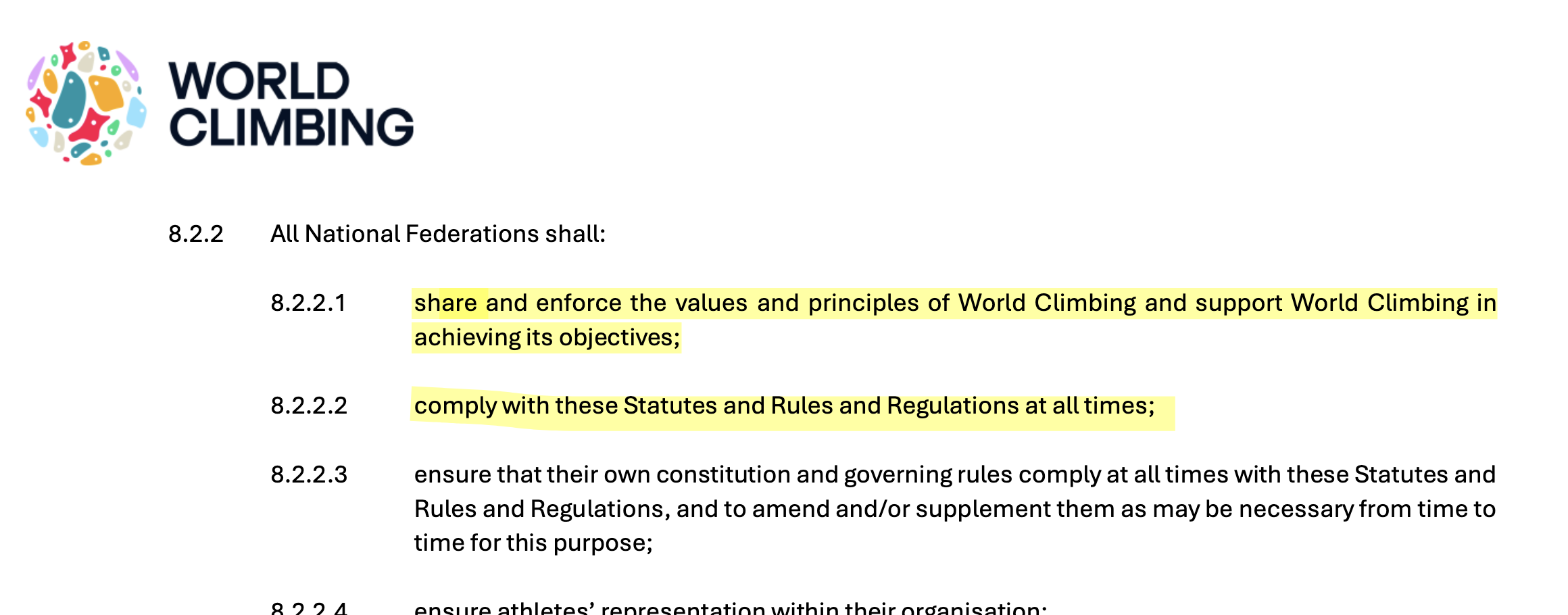
and from the obligations of all National Federations:
World Climbing also has its own Code of Conduct, in which it states in Article 7 and Article 8:
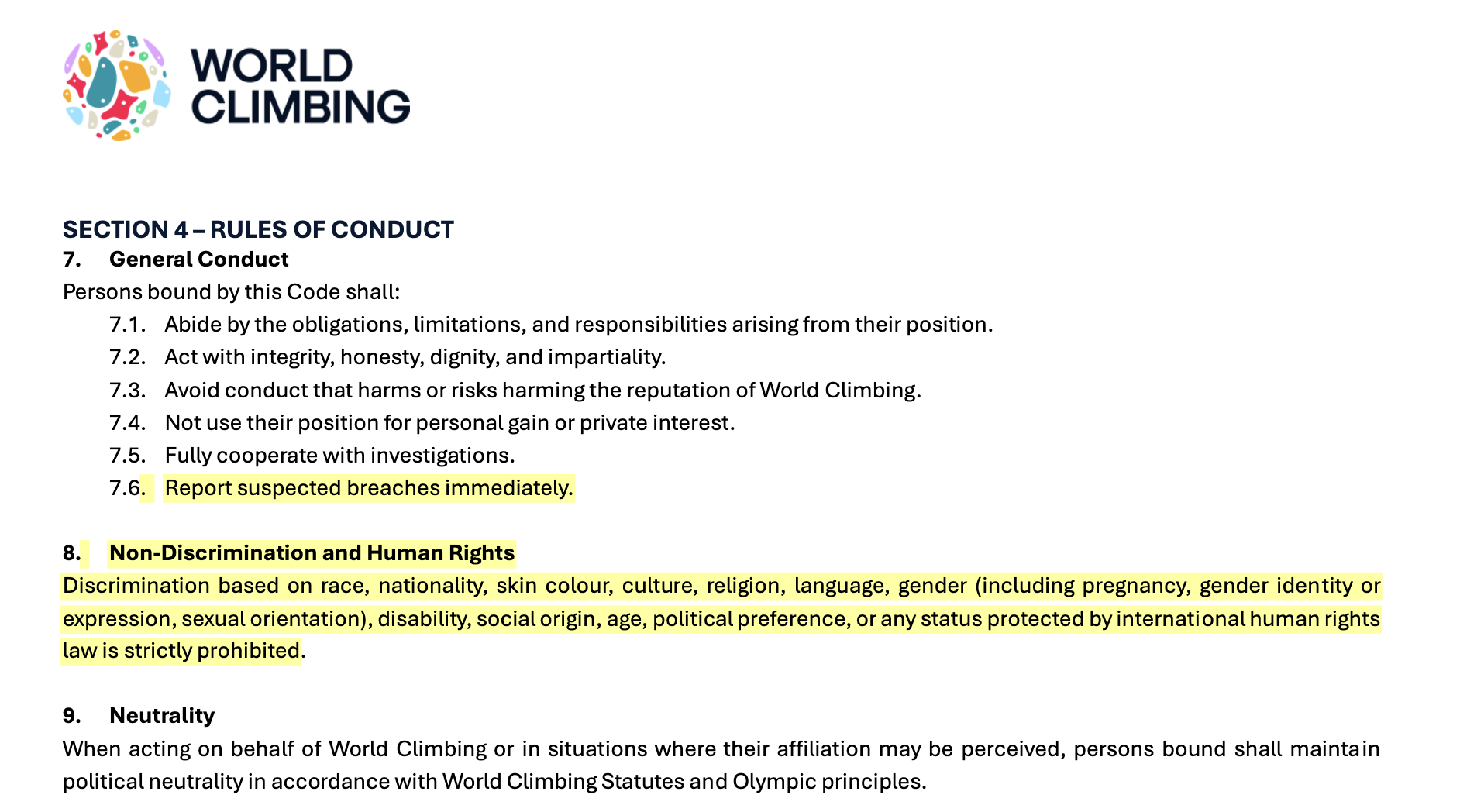
“Persons covered by this Code shall report suspected breaches immediately”, and yet World Climbing has repeatedly been informed of ILCA’s conduct and refused to launch an investigation until July 2026, following pressure from National Federations. Why do we still not have a concluded investigation after years of alleged violations by ILCA?
It should also be noted that, in the 2026 update to its Code of Conduct, World Climbing, following the lead of the IOC, made sure to introduce a provision on political neutrality, as though neutrality could justify turning a blind eye to the occupation of climbing areas and the conduct taking place there.
Not only is the Israel Climbing Association participating in the confiscation and requisitioning of public Palestinian land for the establishment of Israeli settlements, but it is also discriminating against Palestinians who wish to continue climbing on those crags.
There are countless reports from Palestinian climbers who have been violently harassed both by the Israeli army and settlers while trying to enjoy a day out in the crag and the guides of the occupied crags are filled with notes that make the discrimination apparent.
On the Ein Yabrud crag the guide says: “How to Get There (for Israelis): Navigate to Beit El via Waze” - as access to Palestinian climbers is forbidden as it is in Military Zone - and “Shabbat Notice: Beit El is a religious community, so driving inside the town is not permitted on Shabbat” - so the way to access the crag is not available on Sundays. The case of Ein Yabrud is particularly egregious, as the IFSC and the UIAA are officially endorsing a crag that has been shamelessly stolen from Palestinians and the work of Palestinian climbers erased on the Israeli guidebook.
Ein Yabrud was initially bolted around 2014-2015 by international climbers and included in the Climbing Palestine Guidebook, published in 2019. Before October 2023, Ein Yabrud was declared a military zone, and all access to Palestinians was prohibited. Israeli settlers started climbing there, adding new routes, and writing a new guidebook that was published in August of 2022, renaming the crag “Beit El”. This is part of the broader pattern of land theft and forced displacement across the West Bank, as the town of Ein Yabrud lies in the area of the illegal settlement of Ofra. Ofra is another unauthorised outpost, as Israeli settlers have expropriated the lands belonging to the village, restricted Palestinian access to their farms and livelihoods, and expanded their settlement activity.
The guide, with the IFSC and UIAA logos, entirely omits any acknowledgment of the original Palestinian bolters and states: “As far as is known, the first routes on the cliff were bolted by a pair of American climbers who established the first climbing wall in Ramallah. A local climber named Yitzhak Shifman identified the potential of the site and, once the go-ahead was received, both from the original bolters and from the local council, a continuation project was launched under the leadership of bolters from the Climbing Federation and with funding from the Beit El Council, which enlisted to assist in financing the project.”
Yet, the Israeli climbers replicated the routes documented in the Palestinian climbing guide and have the audacity to frame the account with the disclaimer “as far as is known”, knowing full well who the first bolters are.
The PDF published by the Israeli Climbing Federation in 2022 is a copy stolen from the author, Tim Bruns, of the PDF he created before he then went on to co-author the Climbing Palestine Guidebook in 2019.
From the Climbing Palestine Guidebook, published in 2019:


From the Israeli Guide book, stolen and published in 2022:
The entire Climbing Palestine Guide is plagiarised in this fashion in the Israeli guide.
In addition to the plagiarism and the appropriation of land, how depraved must Israel, the ILCA, World Climbing and the UIAA be to have a guidebook describing how to relax in various springs after a day of climbing, fully aware that the local population lives under an apartheid system and cannot access the crags or the surrounding water?
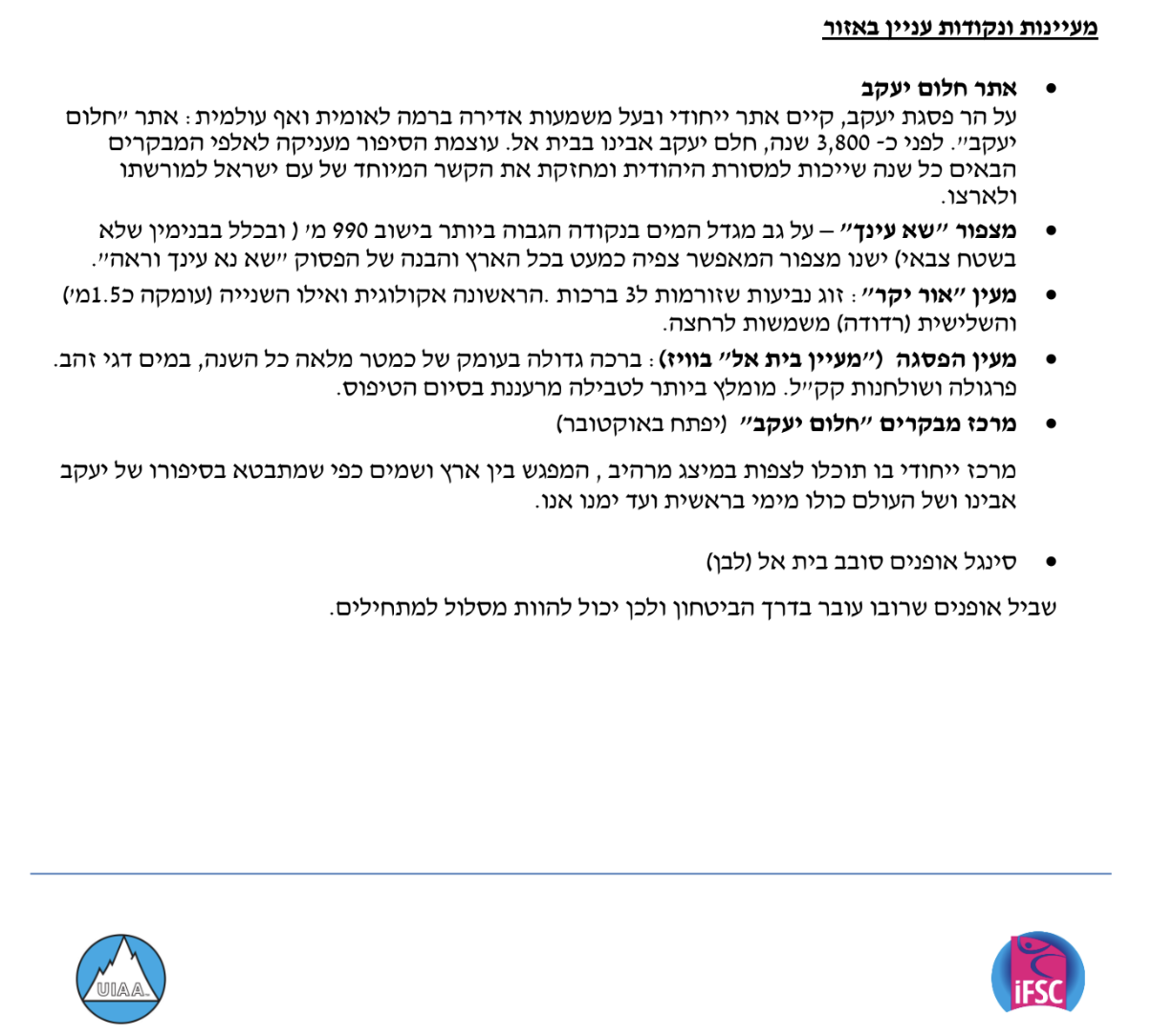

On the Ein Prat-Ein Fara crag page of 27 Crags, Palestinian climbers explain: “There are three ways to enter the climbing area and, like many things in the West Bank, how you can access it depends on your ID and ethno-religious background. Once you reach the gate of the Anatot settlement, access to West Bank Palestinians and green-plated Palestinian cars is forbidden. Foreigners, Israelis and Jerusalemites are allowed to enter the settlement in yellow-plated Israeli cars. Palestinians, therefore, have two options: drive around the settlement on an unmarked dirt road (as described on the Access page) or park outside the gates of the Anatot settlement and hike down for about 45 minutes to the climbing area.”
In 2022, Tim Bruns published an account of his encounter with the Israeli army while attempting to climb in New Ein Qiniya: “In 2019, a group of Palestinian climbers and a few international friends hiked out to a local crag near the West Bank city of Ramallah to climb, camp, and enjoy a respite from the city. In the evening, as dusk settled over the quiet valley, the climbers lit a campfire. Suddenly flares launched from an opposing hilltop, illuminating the valley in a harsh, bright light. Soon thereafter a dozen Israeli Defense Force (IDF) soldiers appeared out of the darkness and surrounded the climbers. They were dressed in full combat fatigues and carried M4 assault rifles. “You cannot be here,” said the commanding officer. When asked why, the soldiers provided no reason. The climbers were told to sit on the ground and, one-by-one, were forced to pose for mugshots. The soldiers took their IDs. Finally the climbers were told to leave. They were marched back down the valley with the soldiers’ weapons’ menacing red laser dots on their backs.”
In the Burqa crag, Wadi Climbing has posted on Instagram videos of their interactions with the Israeli army and the settlers, and has reported those interactions on their blog: “We tried to speak with soldiers in different languages, such as English and Hebrew. ‘We have documents proving that this land is Palestinian property. What are your claims?’ The only response the soldiers ever had, 'This is an order, you must leave’. Conversely, when we asked the settlers, they only say, "God gave us this land!" When asked if they have documents, they only refer to the holy books as a reference!”
Can World Climbing in good faith claim that the Israel Climbing Association is not:
(1) engaging in acts of discrimination based on ethnicity, nationality, language, social origin, religion, and political opinion?
(2) creating an unsafe sporting environment on the occupied crags?
(3) promoting the Israeli settlers and army intimidation, harassment and abuse of Palestinian climbers on occupied crags?
What authority does the IFSC have to ban National Members for breaches of the Statutes and Code of Conduct?
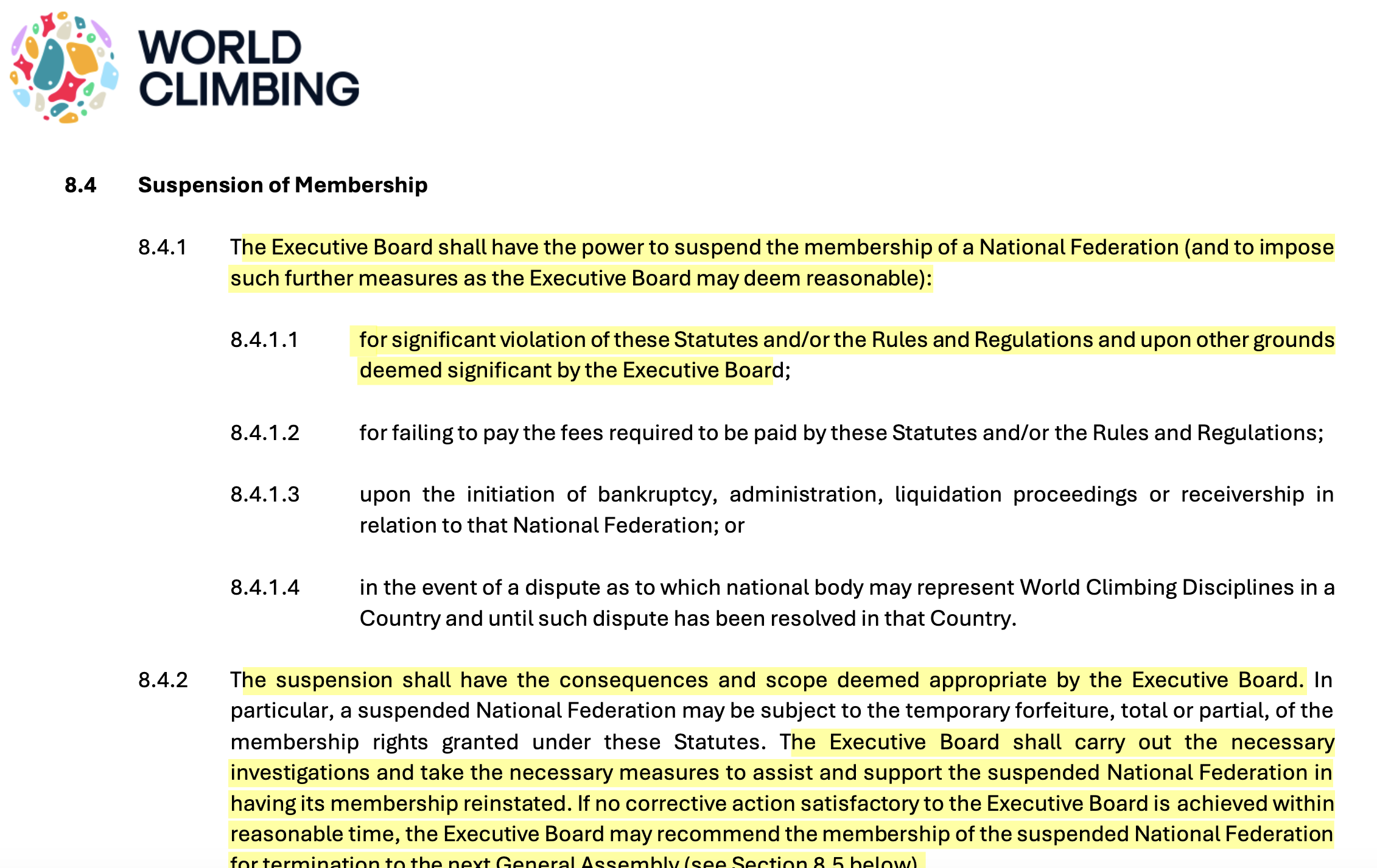
Article 8 of World Climbing’s Statutes deal with the question of Suspension of Membership and is proof that that World Climbing has the obligation and the full authority to suspend membership of any National Federation for significant violations of the Statutes and require NO involvement or guidance from the International Olympics Committee.
4. How the Israel Climbing Association’s crimes are contrary to UIAA’s statutes
As well as all of the above, we must point out that, the UIAA has a Code of Ethics which states:
“All forms of physical, verbal, psychological, professional or sexual harassment and all forms of discrimination based on race, ethnic origin, gender, sexual orientation, religion, political or other opinion, marital status, national or social origin, property, birth or other status are strictly prohibited to respect and safeguard the dignity of every individual.”
According to the same Code, violations can be found regardless of intent:
“As a general rule, any breach of the Code may be established whether it was committed deliberately or negligently, whether or not the breach constitutes an act or an attempted act, and whether the parties acted as participant, accomplice or instigator.”

The UIAA Declaration on Hiking, Climbing and Mountaineering, published in 2025, states on Chapter 3: “We are considerate when proposing a name for a route, a peak, or other parts of a mountain: we consult with the local communities and respect local customs and existing rules to ensure that the proposed name is not offensive” and Chapter 8: “We respect local customs, cultural and legal rights of landowners. We also respect other visitors who have interests other than climbing and mountaineering” but it seems that for the UIAA, this does not apply when it comes to Israel occupying Palestinian crags. When it comes to Israel’s occupation, the UIAA endorses and allows its logo to be printed on Israeli guidebooks, regardless of the legal rights of landowners.
What authority does the UIAA have to ban National Members for breaches of the Statutes and Code of Conduct?
UIAA’s Code of Ethics (article 4) cites: “Any person may address a complaint or report an alleged breach of the Code to the UIAA Court constituted under Article 23 of the Articles of Association (“the UIAA Court”).” The Code then sets out, in detail, the procedure for handling such complaints. Nowhere in the seven pages outlining these procedures is there any mention of the IOC being consulted or involved in the process of imposing sanctions on National Federations for breaches of the UIAA Code of Ethics.
As an Olympic-recognized international federation, World Climbing and the UIAA are required to comply with the Olympic Charter, last updated in 2026:
Principle 4: “The practice of sport is a human right. Every individual must have access to the practice of sport, without discrimination of any kind in respect of internationally recognised human rights … The Olympic spirit requires mutual understanding with a spirit of friendship, solidarity and fair play.”
Principle 6: “The enjoyment of the rights and freedoms set forth in this Olympic Charter shall be secured without discrimination of any kind, such as race, colour, sex, sexual orientation, language, religion, political or other opinion, national or social origin, property, birth or other status.”
All Fundamental Principles and other rules of the Olympic Charter apply to World Climbing and the UIAA both by virtue of Article 5 of IFSC’s Statutes and Article 3 of UIAA’s AoA and by its recognition as an international federation by the IOC (Article 2.1), which makes it part of the Olympic Movement and therefore bound by the IOC Charter.
World Climbing hides behind the IOC, claiming that since the IOC has not imposed sanctions, it too should refrain from acting against Israel. This excuse is baseless. As outlined above, there is no requirement anywhere for the IOC to be consulted or to grant approval before sanctions are imposed. World Climbing cannot use the IOC as a shield for inaction. It has both the authority and the responsibility to enforce its own Statutes and Code of Ethics and its continued refusal to do so is a deliberate choice, not an obligation.
5. How the IFSC and the UIAA are in breach of the Olympic Charter

6.How Israeli climbers are being funded by the Israeli occupation: sportswashing in climbing
In 2023, the Shikun & Binui Group entered into a sponsorship agreement with the Israeli Olympic Committee, through which financial support is provided to a select group of eight athletes, including Israeli climber Ayala Kerem, in a typical way of sportswashing. The seven other funded athletes are judoka Raz Hershko and Gili Sharir; windsurfers Sharon Kantor and Tamar Steinberg; marathon runner Maru Teferi; shooter Olga Tashchyav; sprinter Blessing Afrifa; and climber Ayala Kerem.

Who is the Shikun & Binui Group? Established in 1924 as Solel Boneh, Shikun & Binui is one of the largest construction and infrastructure companies in Israel and a major actor in large-scale civil and military projects. The group has a long history of involvement in the construction and expansion of settlements and related infrastructure in the occupied West Bank and East Jerusalem, including residential units, roads, and public facilities.


On their Instagram bio, both Israeli athlete Ayala Kerem and the Shikun Binui group confirm that the group is sponsoring athletes. Shikun Binui states: נותנת חסות רשמית של הועד האולימפי בישראל 🇮🇱 translate as Official sponsor of the Olympic Committee of Israel 🇮🇱.
What exactly is their involvement in the occupation? Shikun & Binui, primarily through its subsidiary Solel Boneh, has been involved over decades in building and expanding Israeli settlements such as Ma’ale Adumim, Ariel, and Modi’in Illit. The company has also constructed highways and transport infrastructure, including sections of Route 60, that connect settlements to Israel while bypassing Palestinian communities, contributing to the integration of settlements into Israeli infrastructure networks. In addition, reporting indicates involvement in security and military-related construction, including projects for the Israeli Ministry of Defense, checkpoints, and elements of barrier infrastructure around Gaza.
In 2012, Norway’s Government Pension Fund Global (GPFG) decided to exclude Shikun & Binui from its investment portfolio. This decision followed an ethics review concluding that the company’s activities in settlement construction and infrastructure was contributing to violations of international humanitarian law: “The ethics board’s recommendation listed a residential project in Kibbutz Ramat Rachel, near the capital’s Arnona neighborhood, as cause for the move, as well as a 1994 project in the Maaleh Adumim settlement and the involvement of subsidiary Solel Boneh in projects over the Green Line, including in Har Homa.”
Since 2020, the United Nations has been keeping a database all businesses with involvement in the annexation of Occupied Palestine. In 2025, the Shikun & Binui Group and its Solel Boneh subsidiary were added to the data base for: (a) The supply of equipment and materials facilitating the construction and the expansion of settlements and the wall, and associated infrastructure and (e) The provision of services and utilities supporting the maintenance and existence of settlements, including transport.

What is sportswashing? Sportswashing refers to the use of sports sponsorship, events, or athlete support by states or corporations to improve their public image and divert attention from controversial activities, including alleged human rights violations or unethical practices. It is often discussed when high-profile sports partnerships are seen as a way to reframe public perception rather than address underlying criticisms. This is exactly what the Shikun and Binui group is attempting to do by financing and supporting athletes such as Ayala Kerem.
“Neutrality cannot be a label when athletes materially benefit from a military system engaged in war.”
Jenya Kazbekova on World Climbing’s policy of neutrality with Russian athletes
7. How the ICLA, its staff and its athletes participate in the Israeli military
Service in the Israeli military, known as the Israeli Defence Forces (IDF) or Tzahal, is compulsory (except for Arab citizens) from the age of 18, for a minimum service of 24 months for the women and 32 months for the men.
Under Israel’s compulsory military service framework, competitive athletes, including those participating in Olympic sports such as climbing, may be granted “Active Athlete” or “Outstanding Athlete” status by the Military Sports Committee. These designations do not exempt athletes from compulsory military service but allow them to fulfill their military obligations under adjusted service conditions, including special leave arrangements to accommodate training and competitions. Depending on their classification and eligibility, athletes may receive up to 90 days of special leave per year to represent Israel in international sporting competitions.
Accordingly, across all sports, including climbing, it is reasonable to assume that many athletes and staff members have completed their compulsory military service, are currently undertaking compulsory military service (active-duty conscripts), are currently performing reserve military service (mobilized reservists), or have completed their compulsory service and remain eligible for recall to reserve duty (non-mobilized reservists).
The Israel Climbing Association has been outspoken about the recruitment of their staff members into the reserves after October 2023:
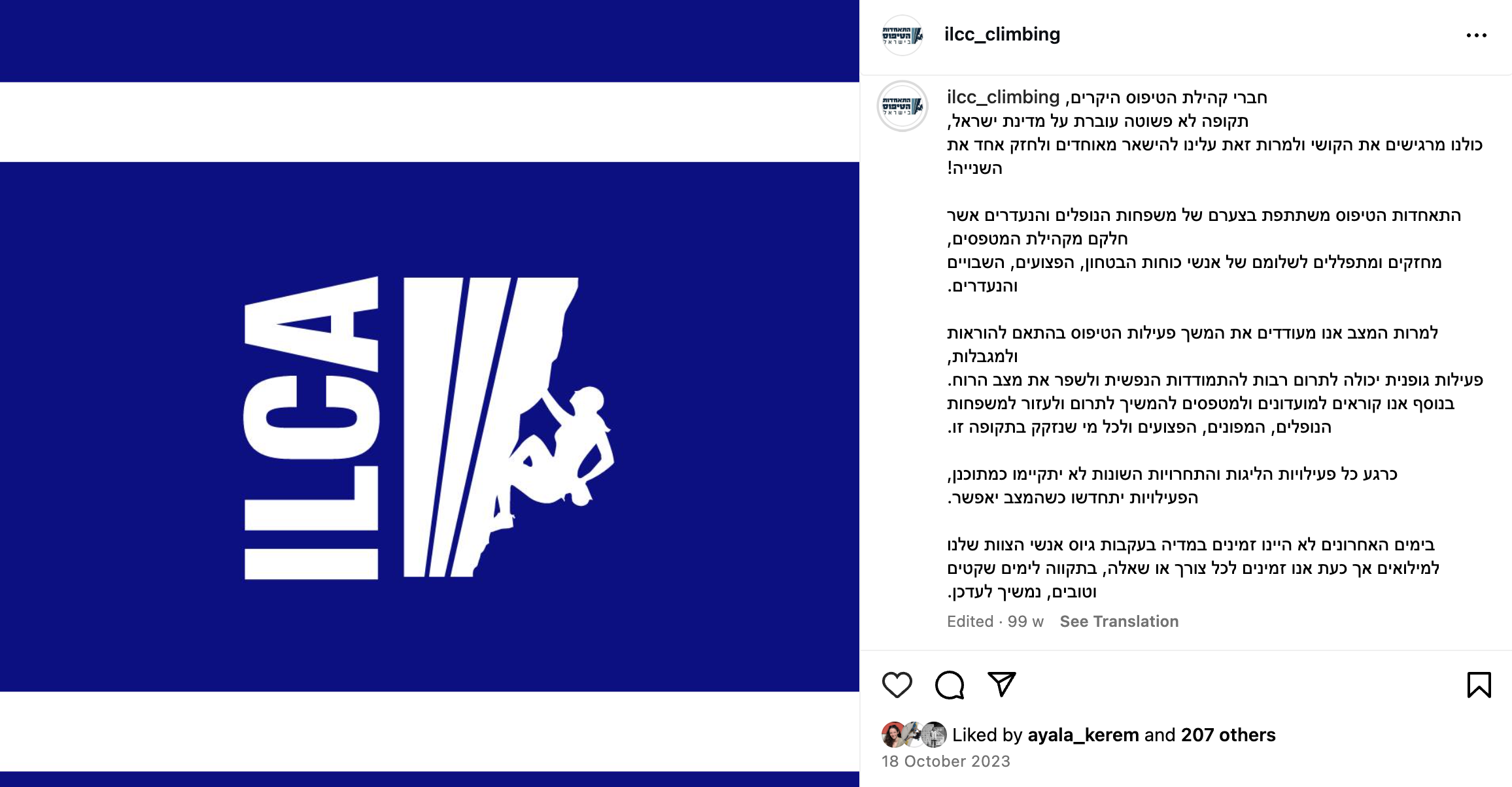


Although Israeli athletes and their federations do everything they can to hide the participation of their athletes in active military duty, investigative work is being done to identify those athletes. Ayala Kerem, one of Israel’s leading competitive climbers, spoke openly about her military service in a November 2025 podcast interview, explaining how she sought to maintain her commitment to climbing and training throughout her military service.
Another example of a top competitive ILCA climber being open about their participation in the Israeli army is Maya Hockerman Dreamer. A May 2025 article published by Mynet Haifa , explicitly states that she served in the Israeli army under the status of an “active athlete,” which allowed for her to continue training regularly during her military service.
Yuval Shemla, another ILCA competitive climber, mentions in a 2020 interview published by Outpanel, that he was enlisted in the Israeli army under the designation of an “outstanding athlete”, and that later on, he also served as a fitness instructor in the Israeli Navy.
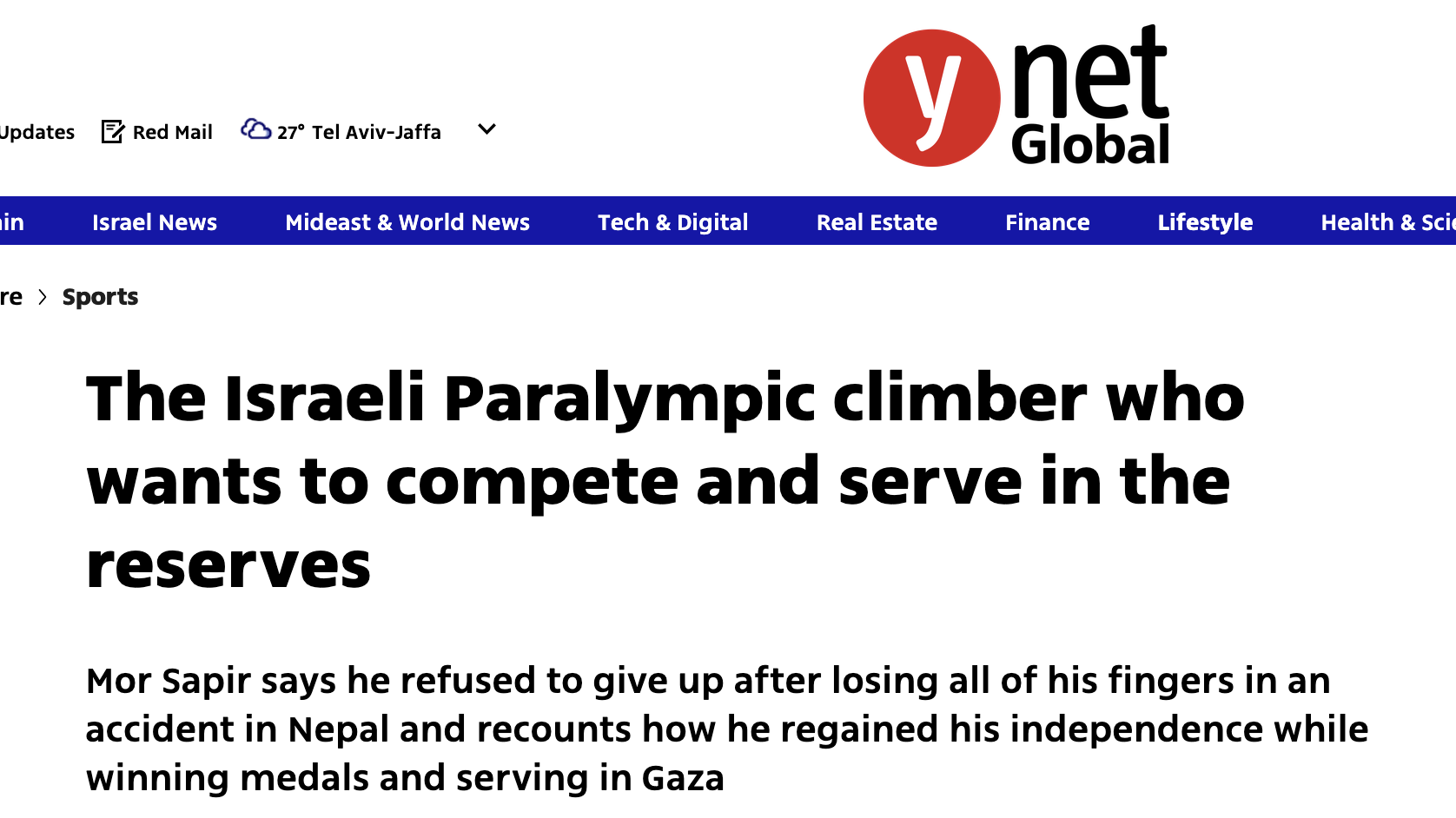
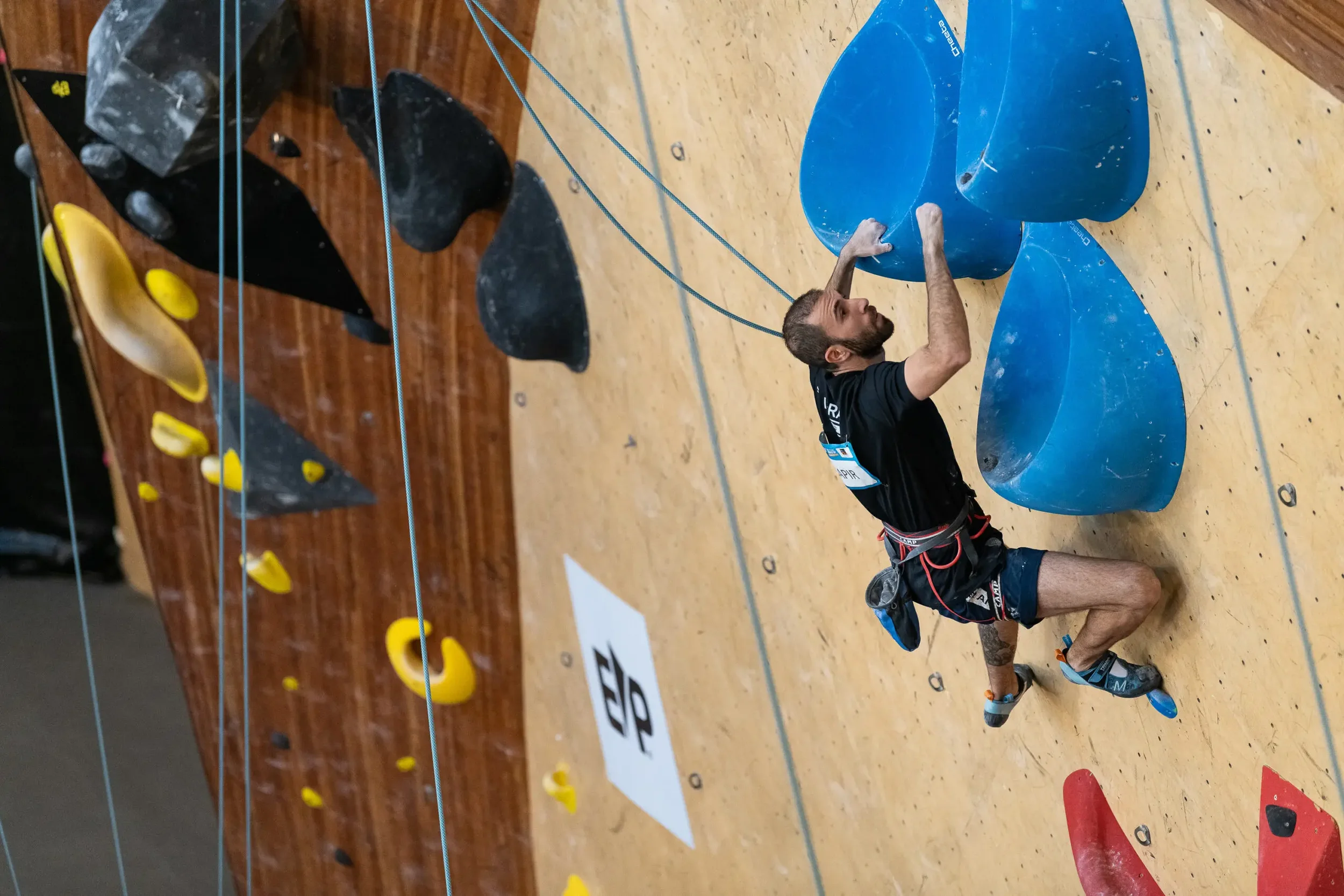
Another direct example of the connection between Israeli competitive climbing and the Israeli military is Mor Sapir, an athlete affiliated with the Israel Climbing Association (ILCA) and one of Israel’s most successful paraclimbers. Sapir is a two-time paraclimbing world champion, winning world titles in 2021 and 2023. Following 7 October 2023 and the beginning of the war in Gaza, Sapir was called up for extended reserve service. In an August 2024 interview with Ynet, he stated that he had accumulated more than 200 days of reserve duty since the beginning of the war while simultaneously attempting to maintain his career as an international competitive climber.
According to Sapir, during this period he served initially as a training officer in his battalion, with responsibilities including preparing soldiers, organizing training and dealing with equipment. He later moved to the battalion's command and operations centre, where he was involved in the coordination of military activity. His reserve service included periods connected with operations in Gaza and on Israel's northern front.
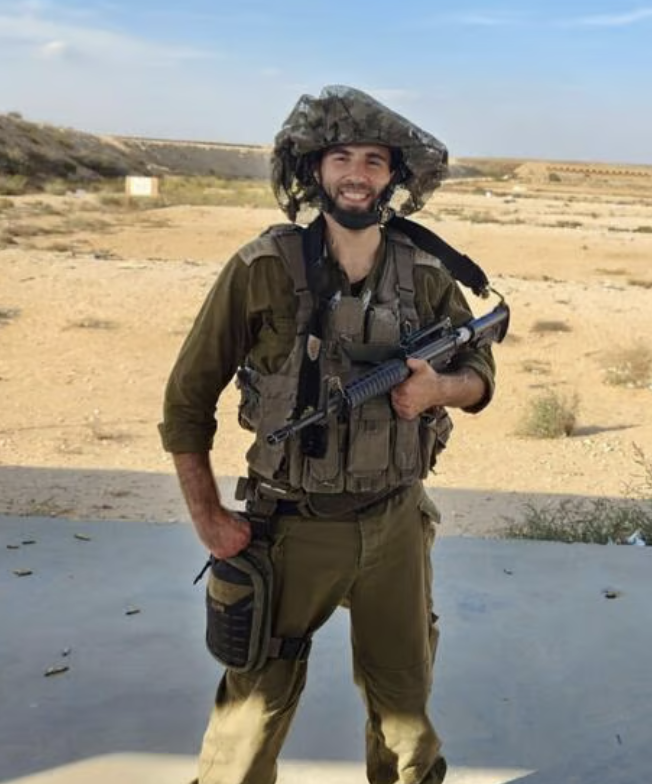
As an institution, the ICLA is also deeply involved in military action. For example, it works alongside the Brothers’ Preparatory Military Academy, a zionist program located at the border with Gaza, explicitly designed to train Israeli youth for command & combat roles in the Israeli military. They describe themselves as: “Mechina Achim – a pre-military leadership framework in the Gaza Envelope. The first combat mechina in the country 🇮🇱” and aims to “prepare teenagers from the north, center, and south of Israel for meaningful service in the IDF, with an emphasis on elite combat units.”


The ICLA presenting on social media their new collaboration with the Brothers Preparatory Military Academy.


Their Instagram account’s bio translates to: “Mechina Achim – a pre-military leadership framework in the Gaza Envelope
The first combat mechina in the country 🇮🇱
In the spirit of Major Ariel Ben Moshe – company commander in Sayeret Matkal, and Major Chen Buchris – deputy commander of the Maglan commando unit.
Mountain Mechina – the best for brothers 🎯”

In this role, ICLA collaborates with the elite military units Maglan (מגלן), Paratroopers Brigade (Tzanhanim / צנחנים), Sayeret Matkal (סיירת מטכ"ל), and Shayetet 13 (13 שייטת):

These units are heavily specialised units conducting military action in Gaza. The Maglan unit has been active in Gaza and in the West Bank for over 20 years, and there are many reports of the work their military activity in Gaza in the last 2 years, both in the north and in the south, in the city of Khan Yunis, a city that has mostly been destroyed by Israel. The Paratroopers Brigade are an old unit from the 1950s, with a long history of military activity in Gaza and the West Bank. Some information on their current activity in Gaza can be found here. Sayeret Matkal is a special reconnaissance unit and considered a premier special forces units of Israel. It has been involved in military activity in Syria and in Gaza. Shayetet 13 is a naval commando unit. It has been involved in all of Israel’s wars, including the last 2 years in Gaza. Shayetet 13 is responsible for the kidnapping of boats sailing on international waters to Gaza as part of freedom flotillas and of the murder of 9 of its activists, shot in the head at close range.